In a small North End Halifax gymnasium, the sport of goalball requires absolute silence. The stillness right before a throw is critical for visually impaired players defending their net. It allows them to hear the faint bells inside a basketball-sized ball hurtling across the court at up to 70 kilometres an hour.
There’s perhaps no other team sport out there that stretches and respects a player’s senses like goalball.
Athletes dive across hardwood floors, orienting themselves by touch with raised tape lines beneath their hands and knees, helping with court awareness. Vision is removed entirely with blackout eye shades, even though players who typically join the sport already have visual impairment.
Goalball itself remains unfamiliar to many Canadians, despite being a Paralympic sport since 1976. Played on a volleyball-sized court, teams of three defend a nine-metre-wide net stretching the full width of the floor. The ball must bounce in designated areas to ensure defenders have a fair chance to hear and react.
Developed after the Second World War for blinded veterans, goalball has grown popular worldwide among the visually impaired, with Nova Scotia’s volunteer-run programs developing some of the best talent in Canada.
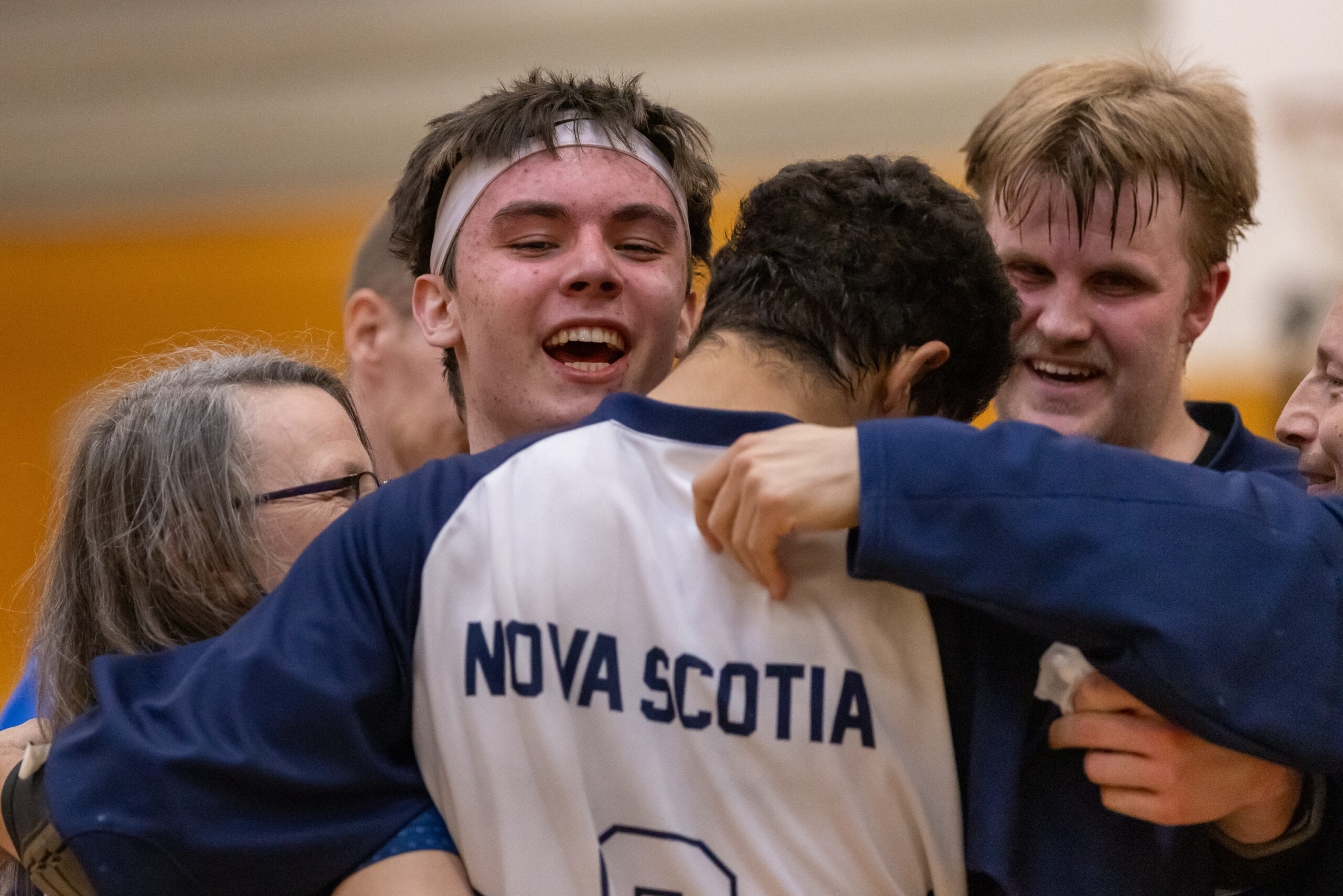
Nova Scotia recently finished fourth in women’s competition at the nationals in Montreal and has quietly emerged as a leader on the men’s side, recording a first-place finish at nationals in May.
Mainly found in Halifax, goalball’s elite performance has always been community-driven.
Sport Nova Scotia’s Parasport funding streams have been central to providing equipment, like eye shades, balls and knee pads. Blind Sports Nova Scotia also ensures affordability for those that wish to participate, maintaining a $30 membership fee to play.
“We’re arguably the most successful goalball program, but funding is a real challenge,” says Peter Parsons, president of Blind Sports Nova Scotia and a member of Canada’s men’s national goalball team.
With four of the six players hailing from Nova Scotia, the men’s national team is set to embark on the International Blind Sports Federation’s world championships in Hangzhou, China from June 6-16. And Parsons, at 50, recently became the oldest athlete to ever make the team. Parsons’ own story adds another layer to the rise of Nova Scotia’s program.
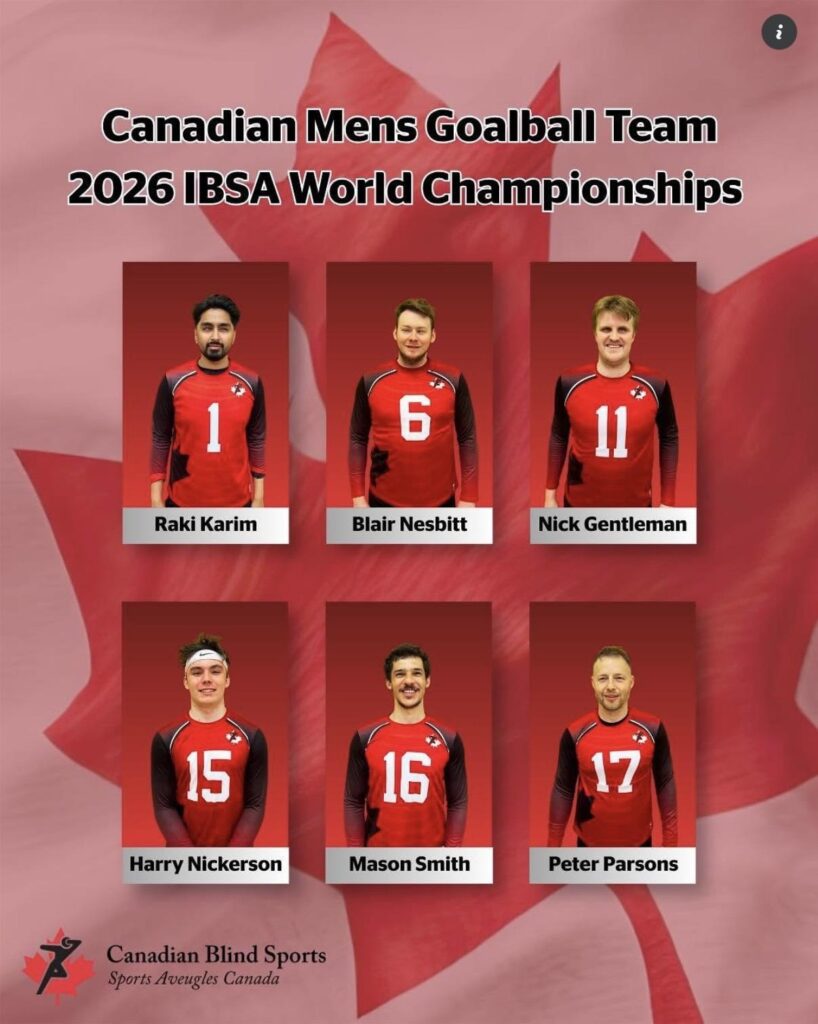
Originally from Goose Bay, Labrador, he lost much of his vision at the age of 12 due to Stargardt disease, a juvenile form of macular degeneration affecting central vision. Yet, that didn’t stop him from continuing to play other mainstream sports growing up.
“I played high school and college badminton competitively, which is not the most visual-friendly sport, especially when you’re dealing with lighter colouring walls and stuff like that in gyms.”
Parsons was 28 when he discovered goalball, while working for CNIB in Winnipeg as an orientation and mobility specialist. And after moving to Halifax in 2005, he became deeply involved in building the sport’s local programing.
Today, his fingerprints are all over the province’s goalball success.
Through his work with the Atlantic Provinces Special Education Authority, Parsons has recruited, coached and mentored many of the province’s top young players, with a few becoming his teammates on the national squad. National team star Harry Nickerson was 10 when Parsons introduced him to the sport. Nick Gentleman started when he was 12 and Mason Smith when he was 15.
“I recruited them all and coached them from the beginning,” Parsons says. “Now they’re teammates on the national team with me.”
To his credit, Parsons has helped create a sustainable talent pipeline for the sport in a province with limited infrastructure.
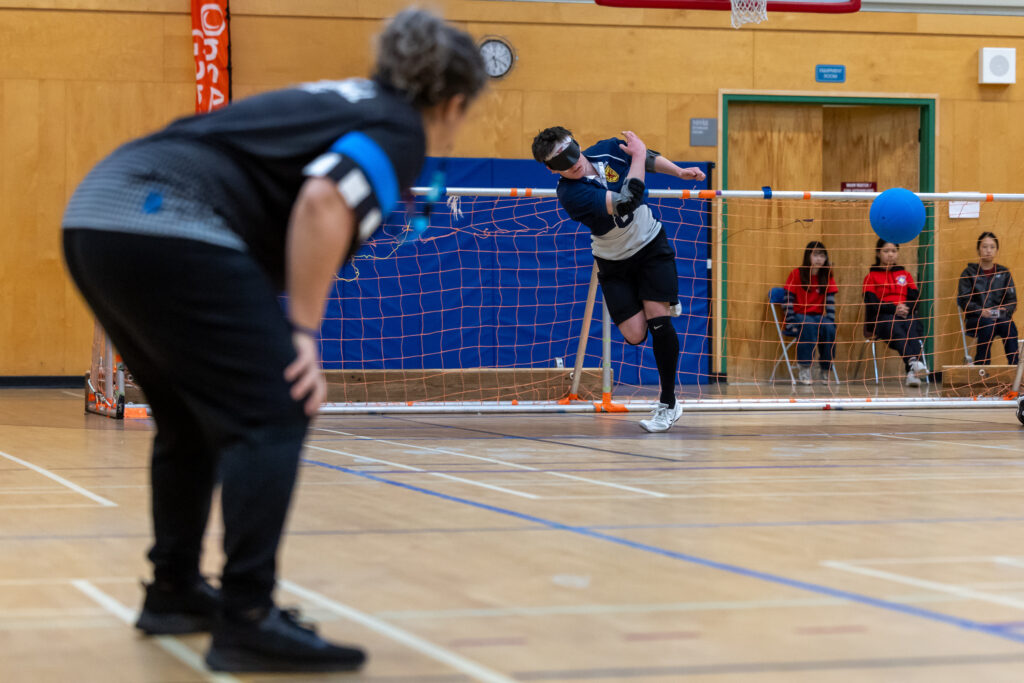
In Nova Scotia, practices are held primarily in Halifax at the George Dixon Centre, with youth programming at Clayton Park Junior High. Expansion outside HRM remains difficult due to volunteer limitations and funding constraints. However, efforts are underway to launch a new program in the Annapolis Valley, led by certified referee Maggie Locke.
While Sport Nova Scotia’s financial support has been vital, success often depends on volunteers carrying extraordinary workloads. Yet, despite the resource challenges, Nova Scotia continues to produce national-level athletes at a disproportionate rate.
Parsons points to players like Nickerson, who made Canada’s men’s national team at 16 years old, and recently earned MVP honours at nationals.
Led by Nickerson, Canada’s men are attempting to break into the top international Paralympic field after missing out on Tokyo and Paris qualifications. June’s world championships in China represent a major opportunity heading toward the 2028 Paralympics in Los Angeles.
Only 16 nations qualified for June’s IBSA world championships, underscoring the level at which Canada’s athletes are competing. Brazil is considered the world’s dominant goalball nation, with hundreds of players, extensive club systems and a dedicated Paralympic training centre.
Locally, Nova Scotia hopes to host senior nationals next year in Halifax. And with greater exposure, pathways that barely existed a generation ago can become more accessible to visually impaired kids looking for a sport, like goalball, suited to them.
“People often didn’t know I was legally blind and had no central vision,” says Parson. “I’d hear about blind sports and I kind of wasn’t interested at the time. Later, I realized I could have been to multiple Paralympics if I got involved earlier.”
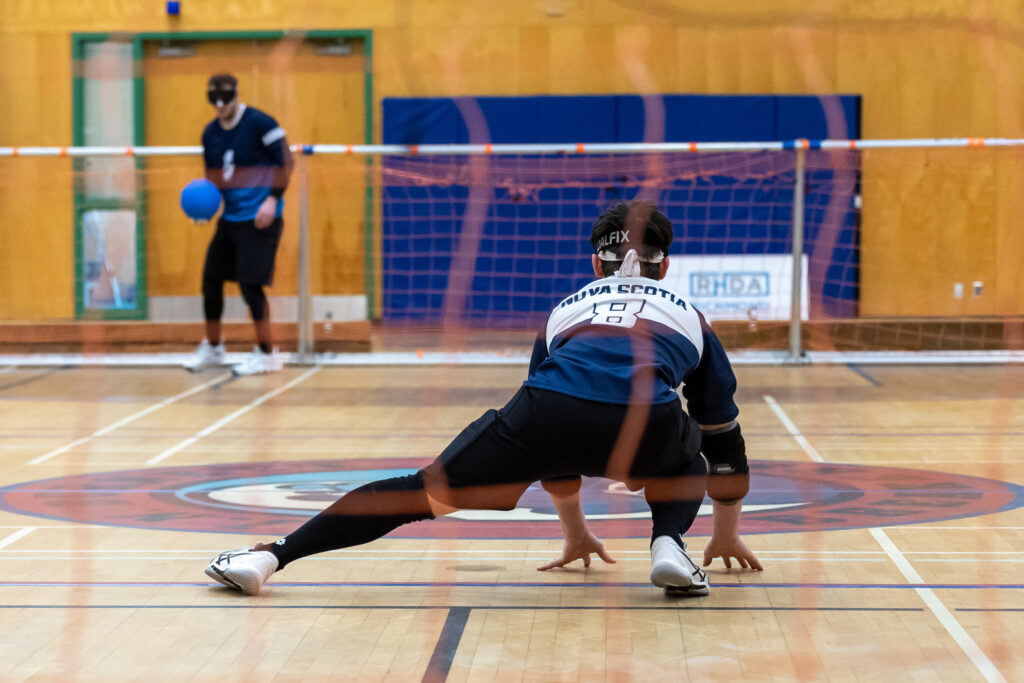
Now, instead of dwelling on missed opportunities, he’s helping create them for others.
Parsons has proven that high-performance sport isn’t just about the most money or best infrastructure; sometimes it starts with one person introducing a sport for others to learn and grow into.
The goalball community in Nova Scotia might be small, but because of Parsons and other volunteers – it’s become mighty on the national stage.