
By Jody Jewers
Following the COVID-19 pandemic, Yarmouth Whitecaps swim coach Alix d’Entremont noticed an uptick in enrolment in the club’s beginner program. This presented several challenges for the coach, who has been with the organization for eight years.
“We’re at capacity right now,” says Alix, adding her group can accommodate between 35 and 40 swimmers. “That means there’s a lot of noise and a lot of people on deck at the same time, as well as a lot of different abilities when you have that many kids in the water.”
When Alix joined the program, the club was using SONR receivers and headsets, which allow coaches to communicate with swimmers while they are in the water. But with these devices at the end of their lifespan, more needed to be purchased.
In addition to doing some fundraising, Alix and the Whitecaps worked with Sport Nova Scotia’s Regional Sport Consultant in the South Shore to submit a Sport Fund application to help support some of the costs.
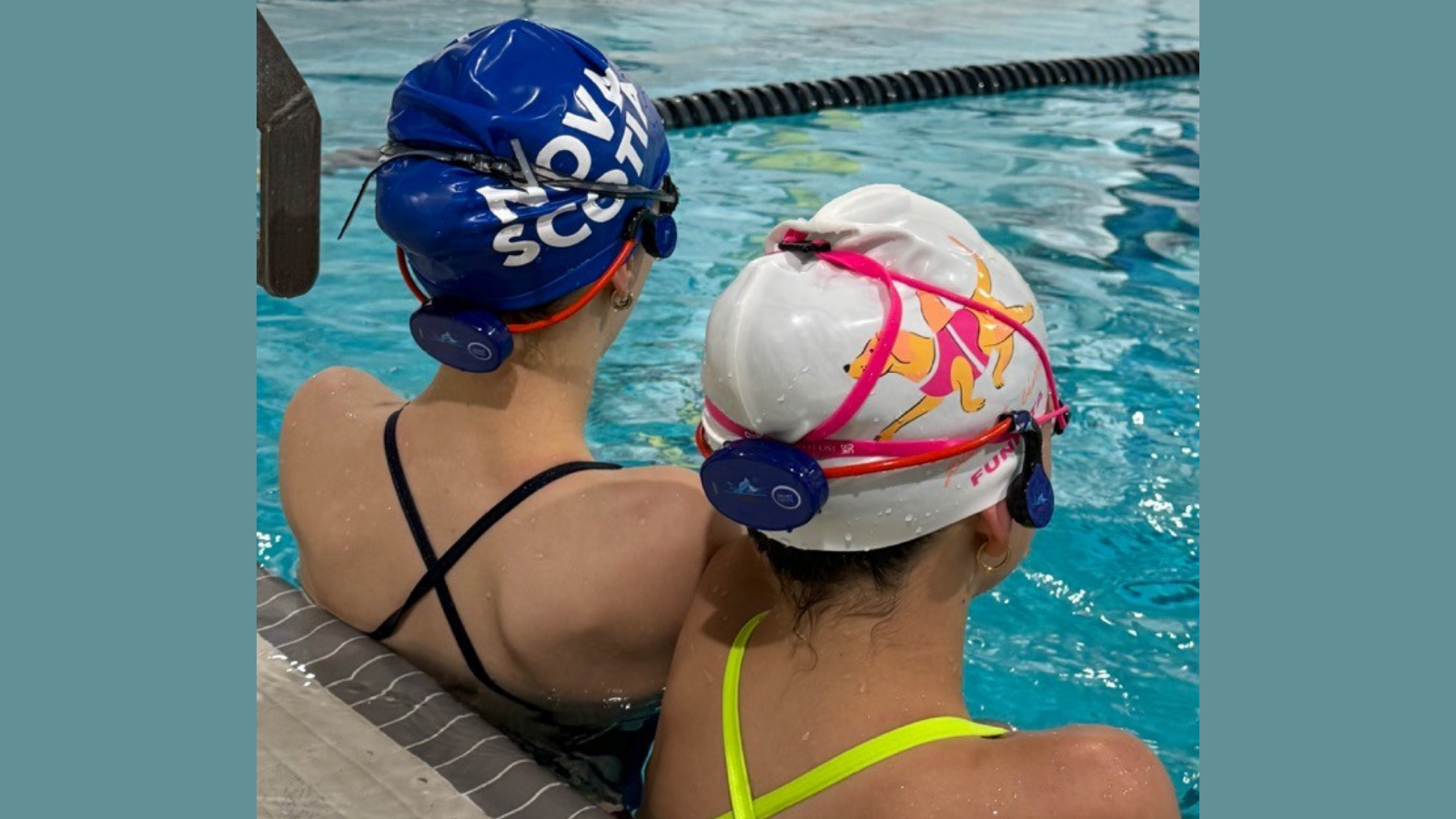
“The ones we had were more of an adult size that wrapped around the ear, but the new ones are like a small disc, probably about two centimetres, and they’re flat,” she explains. “The Dartmouth Crusaders swim club has some of these devices and they were able to let us test them and see how they worked.”
These devices work by placing a receiver under or over a swimmer’s swimming cap with the coach then relaying instructions through a radio transmitter. The device uses bone conduction technology, delivering sound directly to the inner ear through the bones of the skull, bypassing the eardrums.
“We were using them with kids who had attention deficit disorder or different learning strategies,” Alix explains. “We mainly coach from the pool deck and we write things on a whiteboard to help articulate what we’re trying to say to them, but we found a gap with some of our younger swimmers in reading and remembering, so we started using these devices the last few years and found this was a good way to help the kids remember what they’re supposed to be doing and give that live feedback when they’re swimming, and it’s helped keep more of our divergent swimmers in the program.
Alix says the swimmers in the beginner program, which range in age from 7 to 13, enjoy wearing the devices.
“Kids don’t notice them when they’re in the water at all and they love them. We can play music in them, so that can add an extra element when it comes to teaching and makes it more fun for them to learn. We’ve really needed them for kids with different learning abilities, but it’s proven to be beneficial to everyone and it makes our jobs as coaches that much easier.”