This guest feature has been written by Sport Nova Scotia staff member Maddie McDonald.
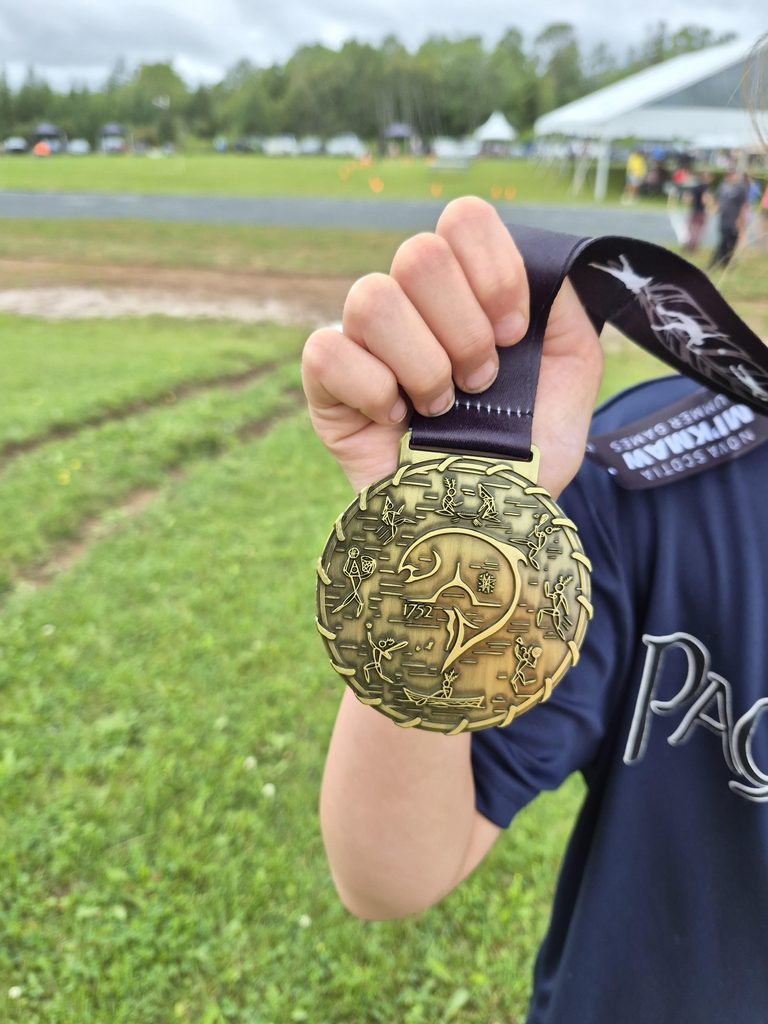
Tuwa’timk (do-wah-dimk) = sport. This summer I was given the opportunity to volunteer with the Nova Scotia Mi’Kmaw Summer Games which was hosted in my community, Sipekne’katik. I wanted to share some of the things I learned through this experience.
Originating in 1972, (I thought wow these games have been around a long time! Then I realized this was the year my mom was born. Not saying you’re old mom, but…) and previously named the Maritime Native Summer Games followed by the Nova Scotia Indian Summer Games, these games were a time for athletes from First Nation communities from Nova Scotia, New Brunswick, Prince Edward Island and Newfoundland and Labrador to gather and participate in an annual sporting event. That’s as far down memory lane as I’ll take you, but I do highly recommend doing your own research to learn more about this beautiful event.
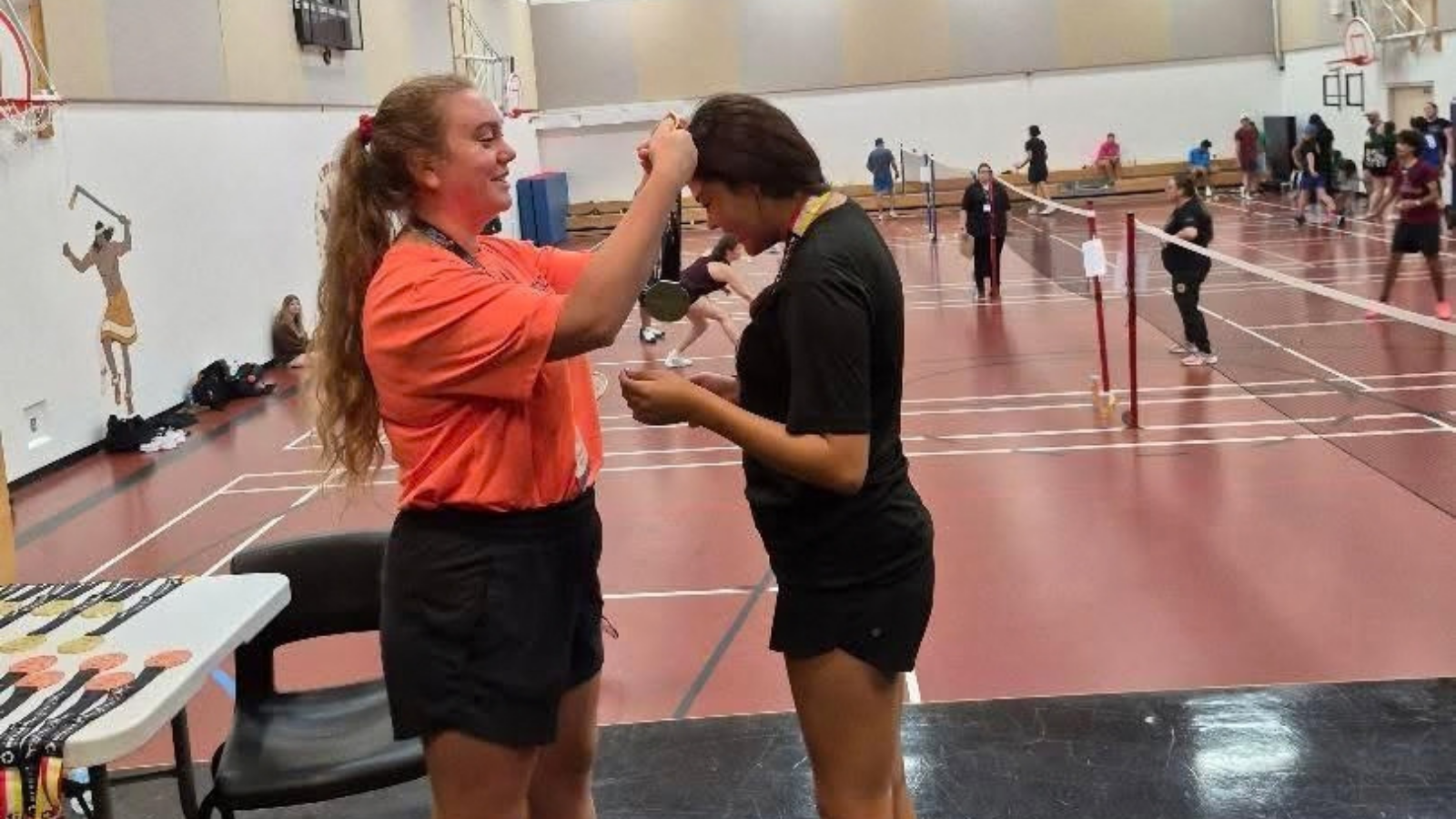
When I arrived at the cabins for volunteer check-in my first morning, admittedly I had no idea where I was going to be assigned, or what my role would be, so I came ready to take anything on. I was asked to head to the school where badminton was being held and was pleasantly surprised to find some members of Badminton Nova Scotia who I had previously had the pleasure of working with at the 2023 North American Indigenous Games.
Athletes were for the most part already registered; however, they were also doing a first come, first serve on the spot registration which allowed those who had decided at the last minute to join. Although this created some chaos, in its own way, it also de-colonized the process.
There were athletes of every ability there. Some came up to me and asked, “How do I play,” whereas others could have mopped the floor with me, even back in my prime badminton days. The structure of the tournament allowed all to participate and still left room for higher level competition.
Badminton Nova Scotia was there for the full three days of the badminton tournament, and every day I was in awe of how well that team was able to adapt and overcome to the ever-changing tournament draw and asks. Their willingness to meet the community where it was allowed for an extremely successful and positive tournament.
After the first day of events, the opening ceremonies were held. The ceremony started off with the scroll runners who had journeyed from Wagmatcook arriving at the Arbour, a beautiful wooden gathering space in the centre of the community. It then had powwow dancing, storytelling and, of course, pin trading (if you know, you know)—all of which brought full body goosebumps and multiple tears to my eyes.
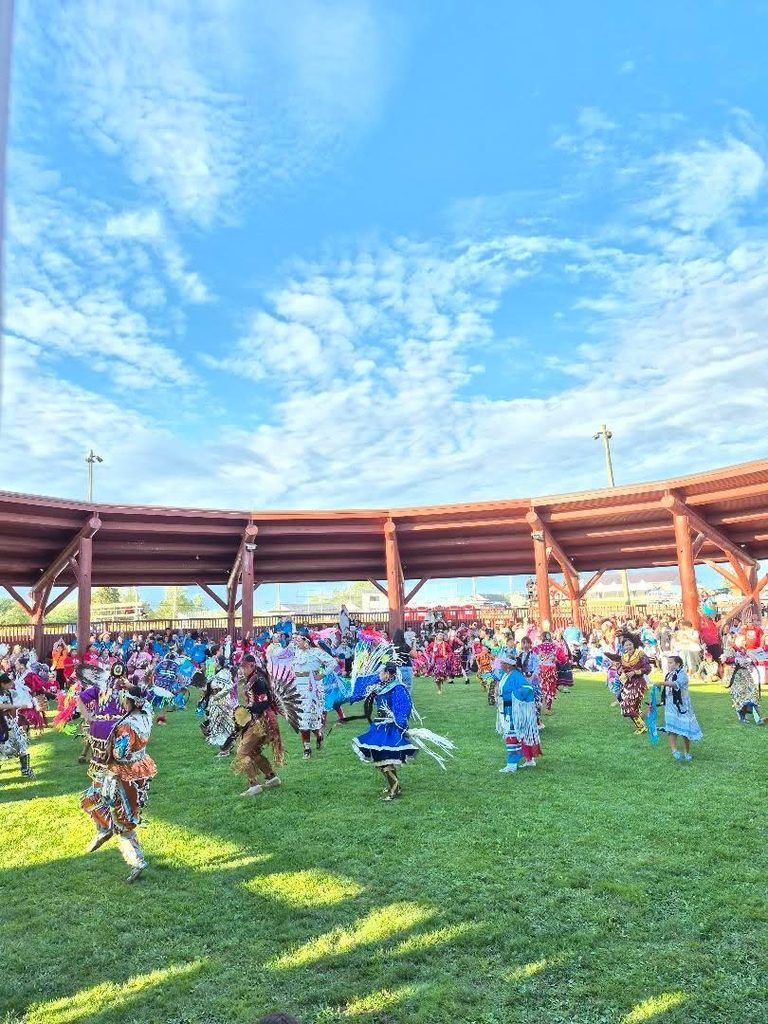
Nnue’gati (ên-noo-ee-gah-dee) = community. If there’s one thing I’ve learned on my journey so far, it’s that above all humans need community. Growing up off reserve (I grew up in Milford which is roughly 15 minutes from Sipekne’katik), I wasn’t as connected to the community as I could have been. Admittedly I only went there to visit and play bingo with my great-grandmother or to attend family funerals.
We all use our own ways to connect with our roots and cultures and mine has been through sport. So, when I had the opportunity to give back, I was excited, but also nervous as all get out. Almost immediately I was asked by a community member, “Who are you related to?” I mentioned my grandfather’s name, to which she replied, “Oh yeah Ntus (Dooce), we’re cousins.”
In that moment, I realized that your roots are your roots, no matter how connected to them you have or haven’t been. Throughout my three days there, I had very similar conversations with multiple community members, getting to learn more about family members who had passed and stories I had never heard.
Sport is as old as time immemorial. My largest take away from this experience (and honestly one of the biggest things I’ve learned during my time as the Equity, Diversity, Inclusion and Accessibility Community Sport Consultant at Sport Nova Scotia) is that we need to re-imagine what sport can look like. The traditional sport sector simply does not work in some communities. So instead of attempting to fit a square peg into a round hole, we need to meet communities where they are at and work collectively to ensure a positive experience is had by all.
In closing, I’d like to leave you with Truth and Reconciliation Commission Call to Action #89:
“We call upon the federal government to amend the Physical Activity and Sport Act to support reconciliation by ensuring that policies to promote physical activity as a fundamental element of health and well-being, reduce barriers to sports participation, increase the pursuit of excellence in sport, and build capacity in the Canadian sport system, are inclusive of Aboriginal peoples.”