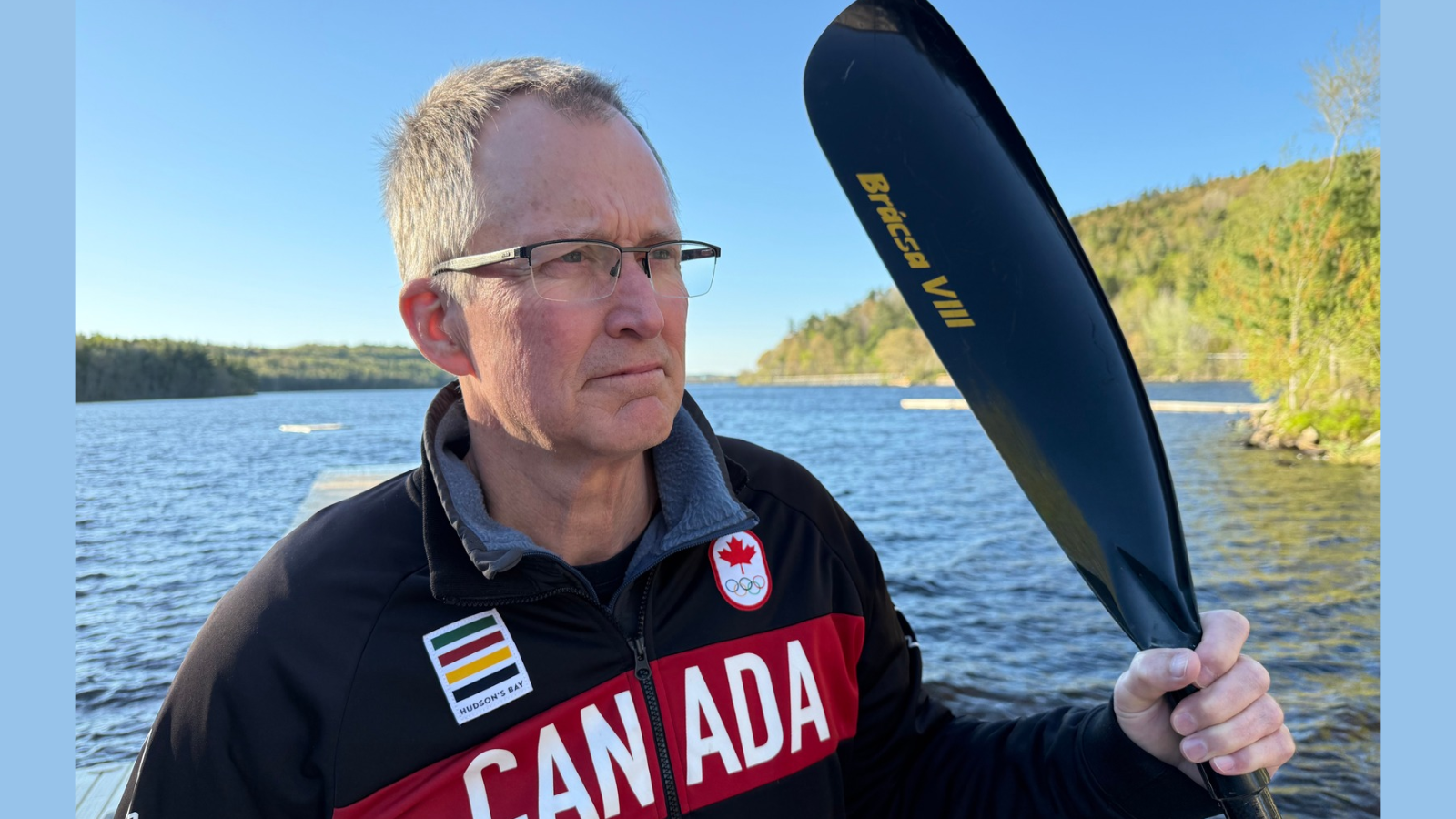
When Scott Logan was inducted into the Nova Scotia Sport Hall of Fame as a builder earlier this month, his old paddling coach, John MacLeod, was there to see it. For Scott, that mattered more than any plaque.
“It was so great to have him there,” Scott says. “He was the guy who inspired me to get into paddling in a big way, but more than that, he inspired me to be a leader, just based on the modelling that he demonstrated.”
That leadership has shaped Nova Scotia sport for more than 50 years. Scott has been a canoe-kayak coach, an entrepreneur, a national team leader, the chief executive officer of Sport Nova Scotia, an associate deputy minister with the province and an Olympic broadcaster. Along the way, he was instrumental in initiating programs that still support the province’s athletes, coaches and families.
But he’ll tell you he didn’t do it alone.
“You also feel almost like a bit of an imposter syndrome, because as a builder, you do so much of that with other people,” he admits, when asked what it’s like to get the call from the province’s Sport Hall of Fame. “I guess in my case, I just kept finding the right people to partner with. We did a lot of cool things together.”
Growing up in Dartmouth, Scott played nearly everything: hockey, volleyball, a little soccer, cross-country and downhill skiing. But paddling won out, largely because of the role models and coaches he found in the sport.
He went on to earn a physical education degree at Dalhousie, graduating in 1980, then taught while coaching on the side. In 1984, he went back to school for a master’s in kinesiology, built largely around coaching canoeing.
Nova Scotia had good coaches, Scott says. Still, few had the academic training or experience to take an athlete to the international level.
In the early 1980s, paddling in Atlantic Canada ran on a strictly amateur model. The season was short, coaching was mostly volunteer and charging for it was frowned upon.
“Canoe ended on Labour Day, and it only started on Victoria Day,” Scott says. “You couldn’t train year-round and it wasn’t very professionalized. And I just said, ‘look, if we’re going to be competitive, we need to turn this stuff on its head.’”
As Nova Scotia’s provincial coach, he was offered roughly three days a week of paid work, year-round. He didn’t think that would move the needle.
“I’m not going to do this halfway,” he remembers saying. “I want to do it right and get the results that I know we could get.”
So, in 1983, he started Canoe-Tech. Athletes trained year-round, sometimes 10 sessions a week, on a periodized plan, based on sports science. That means the season started being mapped out in phases, so an athlete peaks at the right time. He borrowed ideas from sports that had already become more professionalized, like swimming, figure skating and gymnastics, learning from any coach who would talk to him.
“I was that guy who was always bugging people at conferences to find out what they knew,” he says.
It worked.
Most of his Canoe-Tech athletes made the national team, and in 1985, Canoe Kayak Canada hired him as its national development coach. Clubs across Atlantic Canada soon came around to two ideas he’d been pushing: hire a professional coach and train year-round.
He went on to coach at the Pan American Games and World Student Games, served as team leader at the 1988 Seoul Olympics and later returned as Canoe Kayak Canada’s high performance director from 2013 to 2016.
His ideas soon outgrew a single sport. When Scott took over Sport Nova Scotia in 1996, he wanted to bring that same thinking to every sport in the province. What he found, he says, was an organization built for administration.
“It was like, gee, we’re not doing enough for kids, coaches and programming,” Scott says. “It was all about moving paper and typing minutes from board meetings. Now, that’s a bit of an exaggeration, but that was largely what it felt like at the time.”
The problem on the ground was simple. Whether a child had a good experience in sport depended on chance.
“What we were left with was what I call a lottery, not a financial one,” Scott says. “As a kid, you may or may not come across a good coach in a program that may or may not be based on good principles, and you may or may not have a great sport experience as a result.”
His goal was to change the odds.
“You have to make the chances of winning that experiential lottery much more in favour of the participant,” he says.
Changing those odds wouldn’t be easy. There was no money to fix programming, and few people saw it as a priority. So, Scott and the Sport Nova Scotia team set out to change minds first.
They identified three audiences: government, the biggest funder; sponsors, who invest where they see a return; and parents, who choose and pay for most of a child’s sport.
Then they spent almost a year gathering research from scientific journals on what sport does for health, communities, youth development and the economy.
“It became this manual that was about two and a half inches thick, with fact after fact in those four categories,” Scott says.
That manual became Sport Makes a Difference. The campaign went to television, radio, billboards and newspapers, and Sport Nova Scotia started its own platforms, like Sport Quarterly, to share its message unedited.
The last step was to put the new resources to work, helping provincial sport organizations build programs good enough to attract kids and keep them.
The results followed. Funding grew, while KidSport and the Nova Scotia Amateur Sport Fund, now SportFund, took root.
“It was a lot of work, but it’s stood the test of time, and the results were obvious,” Scott says. “Even physical inactivity went down at one point in time.”
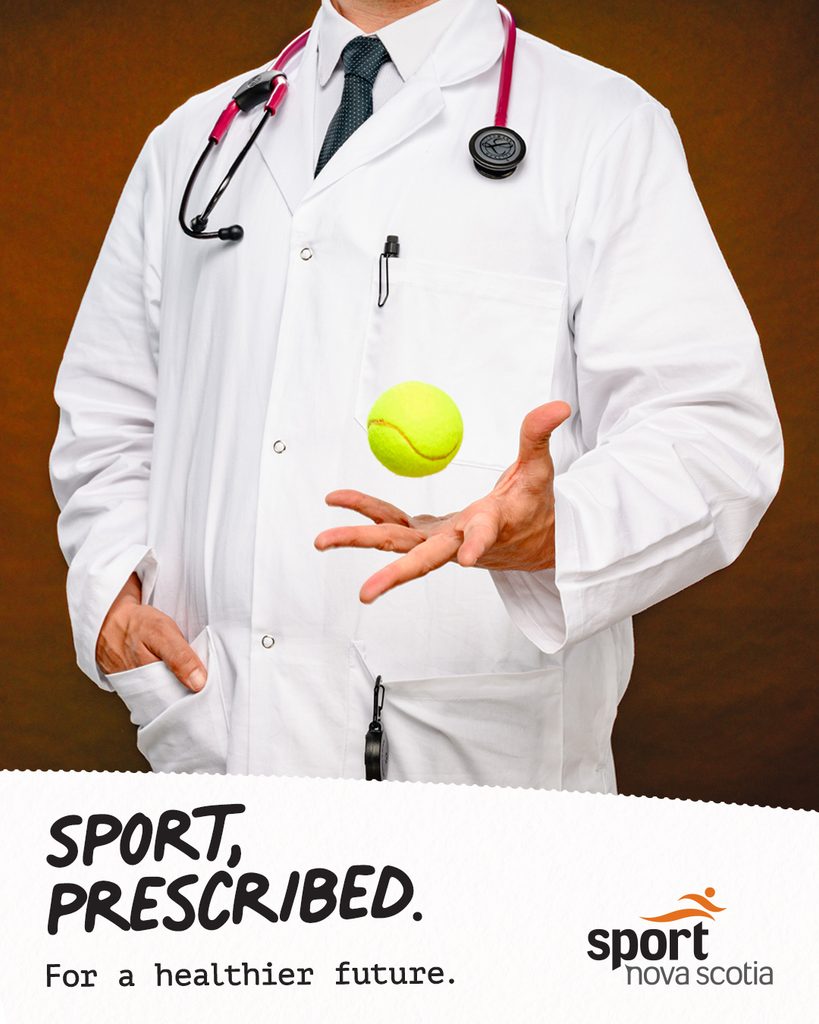
Decades later, this year’s Sport Makes a Difference campaign, which launched this week, leans on the same kind of evidence Scott once stacked in that manual, now focused on health. It presents sport as “part of a healthier future.” It points to research showing only about half of Canadian adults get the recommended amount of physical activity.
Scott made that argument from inside government too. After leaving Sport Nova Scotia, he helped set up the province’s Office of Health Promotion, where the work was about getting as many people active as possible.
He still worries about who gets left out. Some families now spend $10,000 to $15,000 a year on a child’s sport, he says, and paddling is part of that.
“It’s a tragedy that kids can’t get one of the most important things in their life at a level they can afford,” Scott says. School sport, he notes, used to be free. “It became the great equalizer.”
Now, Scott serves as executive director of the Cheema Aquatic Club, a role he’ll retire from in the new year. Asked what he’s most proud of, he doesn’t name a medal or a single moment.
“I don’t think I’ve been anywhere longer than six years, and the point is, I love to build systems that stand the test of time,” he says.
Much of what he started at Sport Nova Scotia is still standing, bigger than he left it.
“It’s got resources now. It does apply funding to programming based on really good criteria,” he notes. “Those things are really cool to see for an old guy like me sitting back, and I know that Nova Scotia sport is in good shape going forward.”