By Jody Jewers
The TetraSki is proof there are no mountains that can’t be conquered when it comes to making skiing accessible for everyone.
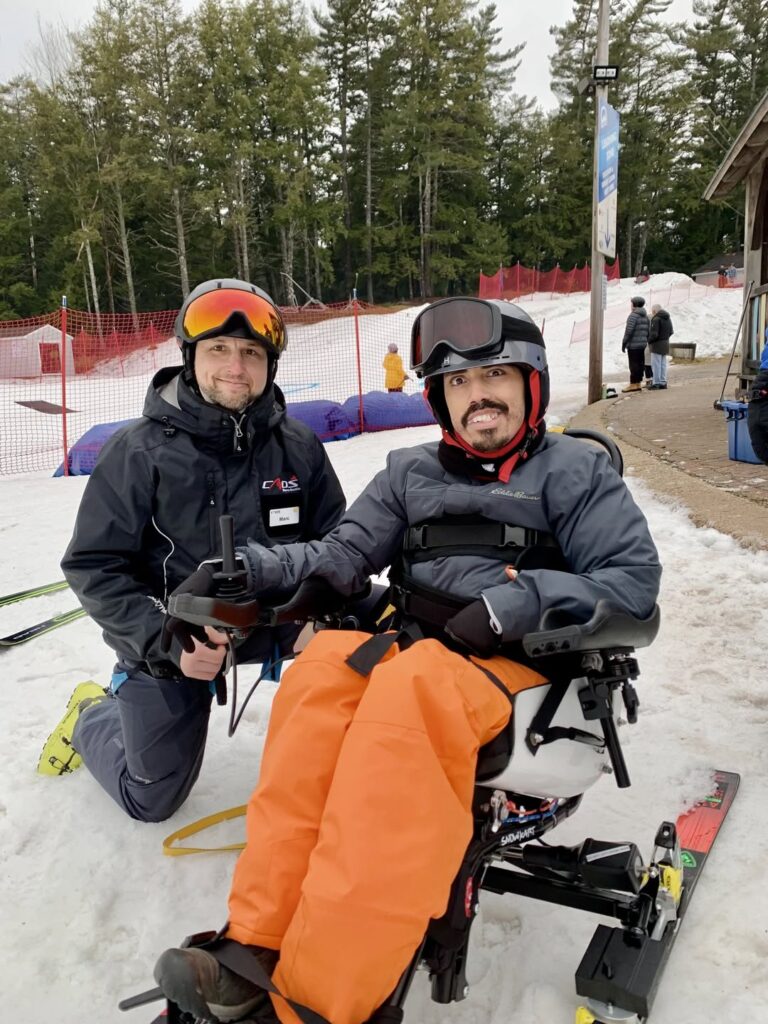
Invented at the University of Utah in 2014, the device allows anyone with a complex physical disability to participate in the sport with a high level of performance and independence. The sitski is controlled using a joystick similar to the type used in power wheelchairs or with the use of a sip-and-puff device for breath control of electric actuators that provide independent turning and speed variability.
This season, Canadian Adaptive Snowsports (CADS) Nova Scotia purchased a TetraSki, an expensive and specialized piece of adaptive equipment, with help from Sport Nova Scotia’s Equity, Diversity, Inclusion and Accessibility Fund and houses it at Ski Martock near Windsor. Martock is one of only two hills in Canada that has the device.
“Zach Dickson, the previous program coordinator here, was in New Zealand instructing and he heard about it there,” says Marc Cormier, who has been program coordinator at Canadian Adaptive Snowsports Nova Scotia since January 2023. “So he followed up when he got back here and went to a course in Utah three or four years ago and that’s how we got introduced. I actually went and got it. I took a four-day course in Aspen, Colorado, to learn how to use it. It’s a little bit larger and wider than the adaptive sit-skis we use in our program, but it’s much heavier because of all the electronic equipment. It weighs around 80 pounds.”
As part of his training, Marc had to operate the TetraSki as if he was living with a physical disability.
“It actually wasn’t hard,” he says. “With breath control, it’s actually pretty gentle and it helps eliminate that sudden jerking motion you can get with using a joystick. Someone who has been in a wheelchair for a long period of time would have no problem getting used to it.”
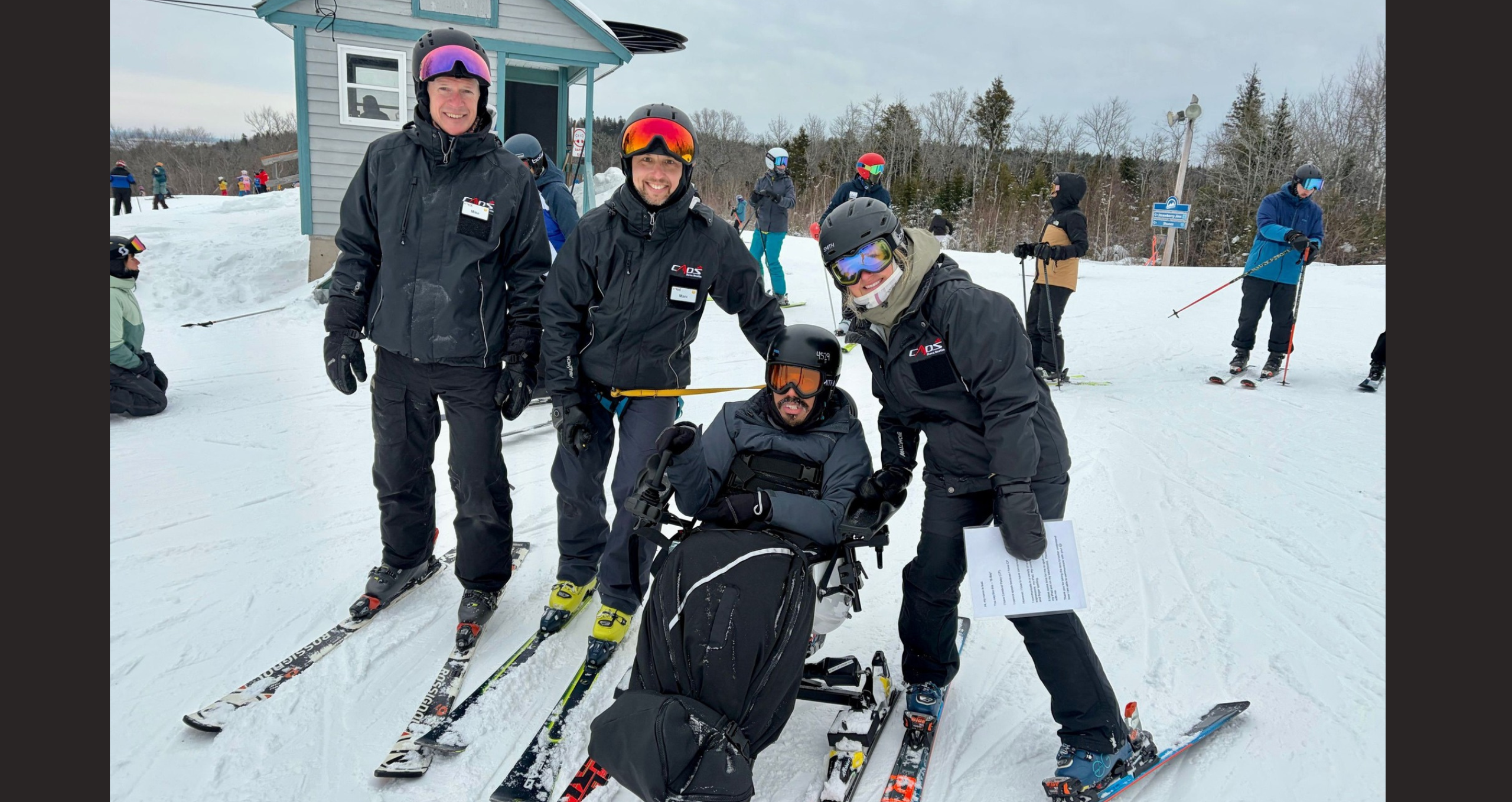
A coach or instructor accompanies anyone using the device and is equipped with a remote control that can be used as an override and a teaching tool. A tether to the coach/instructor serves as an additional backup for safety but usually does not add tension and has no bearing on speed or turning. The TetraSki can be loaded and unloaded on most chairlifts and other ski lifts.
Marc has spent the past few months conducting clinics for coaches and instructors, and held his first run with a TetraSki user in January.
“It was amazing,” he shares. “Everybody at the hill was watching, and for them to see that person out there controlling it themselves and having such a good time brought so many smiles to people’s faces. It was really something to see.”
The first competitive race featuring the TetraSki was held in 2024 in Utah with 32 athletes from across the U.S. and Canada. Marc says the possibility exists that the TetraSki could be introduced at the 2034 Paralympic Games, scheduled for Salt Lake City.
CADS Nova Scotia has about 120 to 130 participants and offers programming at Martock, Ski Wentworth in Cumberland County and Ben Eoin in Cape Breton County.